
Meal Plan for Muscle Gain: The Complete 2026 Guide
A proper meal plan for muscle gain is the difference between spinning your wheels and building real size. Here is exactly what to eat, when to eat it, and why it works.

You can train perfectly — the right exercises, the right volume, progressive overload every session — and still make almost no muscle progress if your nutrition is wrong. Food is not just fuel. It is the raw material your body uses to build new muscle tissue after every session. Without the right inputs, the building process stalls. With the right meal plan for muscle gain, your body has everything it needs to recover, grow, and compound those gains week after week. This guide covers exactly what that plan looks like — the calories, the macros, the meal timing, and the foods that make it work.
The Foundation: Calories First
Before you think about what to eat, you need to know how much. Muscle growth is a calorie-positive process — your body needs more energy coming in than it burns to have the surplus required for building new tissue. This is non-negotiable. You cannot build muscle in a meaningful caloric deficit. The starting point for any muscle gain meal plan is calculating your Total Daily Energy Expenditure (TDEE) and then adding a controlled surplus on top.
How to Calculate Your Muscle Building Calories
Use the Mifflin-St Jeor equation to estimate your TDEE based on age, height, weight, and activity level. Then add a surplus of 250 to 500 calories per day. This range is deliberate: a surplus below 250 calories produces very slow muscle gain, but a surplus above 500 calories per day in natural trainees tends to result in excessive fat gain without proportionally faster muscle growth. For most people, 300 to 400 calories above maintenance is the sweet spot — enough to fuel muscle growth without gaining unnecessary body fat.
Macronutrients: The Muscle Building Equation
Once calories are established, macronutrient targets determine the quality of your muscle-building results. The three macronutrients — protein, carbohydrates, and fats — each play a specific role in the muscle growth process.
Protein: The Non-Negotiable
Protein is the structural building block of muscle tissue. Without sufficient protein, your body cannot repair the microscopic damage caused by training and rebuild those fibres bigger and stronger. Current sports science consensus recommends 1.6 to 2.2 grams of protein per kilogram of bodyweight per day for muscle hypertrophy. For an 80kg person, that is 128 to 176 grams of protein daily. For a 100kg person, 160 to 220 grams. Prioritise whole food protein sources — chicken breast, lean beef, eggs, fish, Greek yoghurt, cottage cheese, and protein shakes when whole food is inconvenient. Distribute your intake across 4 to 5 meals rather than concentrating it in one or two sittings, as muscle protein synthesis responds better to frequent protein doses.
Carbohydrates: Your Training Fuel
Carbohydrates are the primary fuel source for high-intensity training. When your glycogen stores (carbohydrate stored in muscle tissue) are depleted, training performance degrades rapidly — you cannot lift as heavy, you cannot complete as many reps, and the quality of your training stimulus drops. For muscle gain, target 3 to 5 grams of carbohydrates per kilogram of bodyweight depending on your training volume. Prioritise complex, slow-digesting carbohydrate sources — white and brown rice, oats, sweet potato, pasta, and fruit. Time your largest carbohydrate serving around your training session for maximum glycogen replenishment.
Fats: Hormonal Health and Recovery
Dietary fat is essential for testosterone production, joint health, and the absorption of fat-soluble vitamins (A, D, E, and K) that support recovery and immune function. Fat intake should make up the remaining calories after protein and carbohydrates are accounted for — typically 20 to 35 percent of total daily calories. Prioritise unsaturated fat sources: olive oil, avocado, nuts, fatty fish (salmon, mackerel), and eggs. Do not eliminate fat to create a higher carbohydrate budget — chronically low fat intake suppresses testosterone production and impairs long-term muscle building.
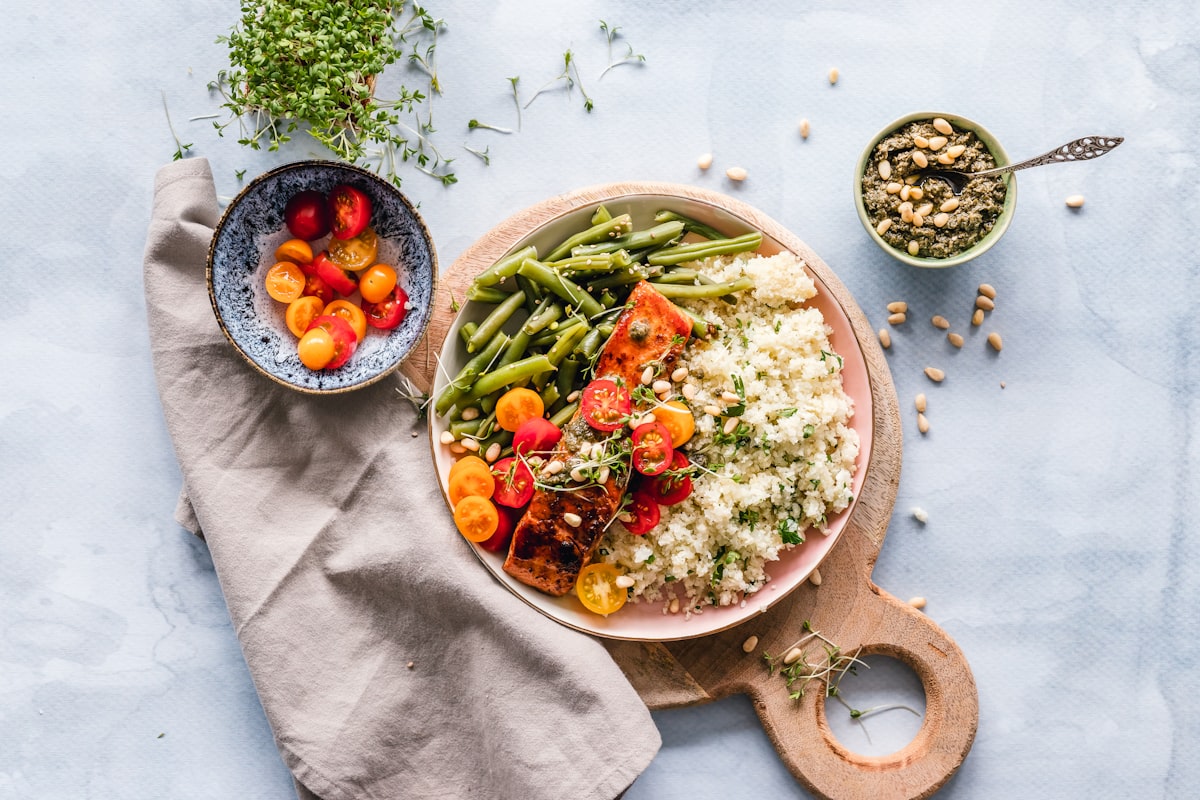
Sample Muscle Gain Meal Plan (80kg Male, 3,000 Calories)
The following is a practical example of what a full day of eating looks like on a muscle gain plan for an 80kg male training 4 days per week. Adjust quantities proportionally based on your own calorie target.
Meal 1 — Breakfast (7:00am)
- 4 whole eggs scrambled with 2 egg whites
- 100g rolled oats cooked with water
- 1 medium banana
- 250ml full-cream milk
- Approx. 700 calories | 45g protein | 80g carbs | 20g fat
Meal 2 — Mid-Morning (10:30am)
- 200g Greek yoghurt (full fat)
- 40g mixed nuts and seeds
- 1 apple
- Approx. 450 calories | 25g protein | 30g carbs | 22g fat
Meal 3 — Lunch (1:00pm)
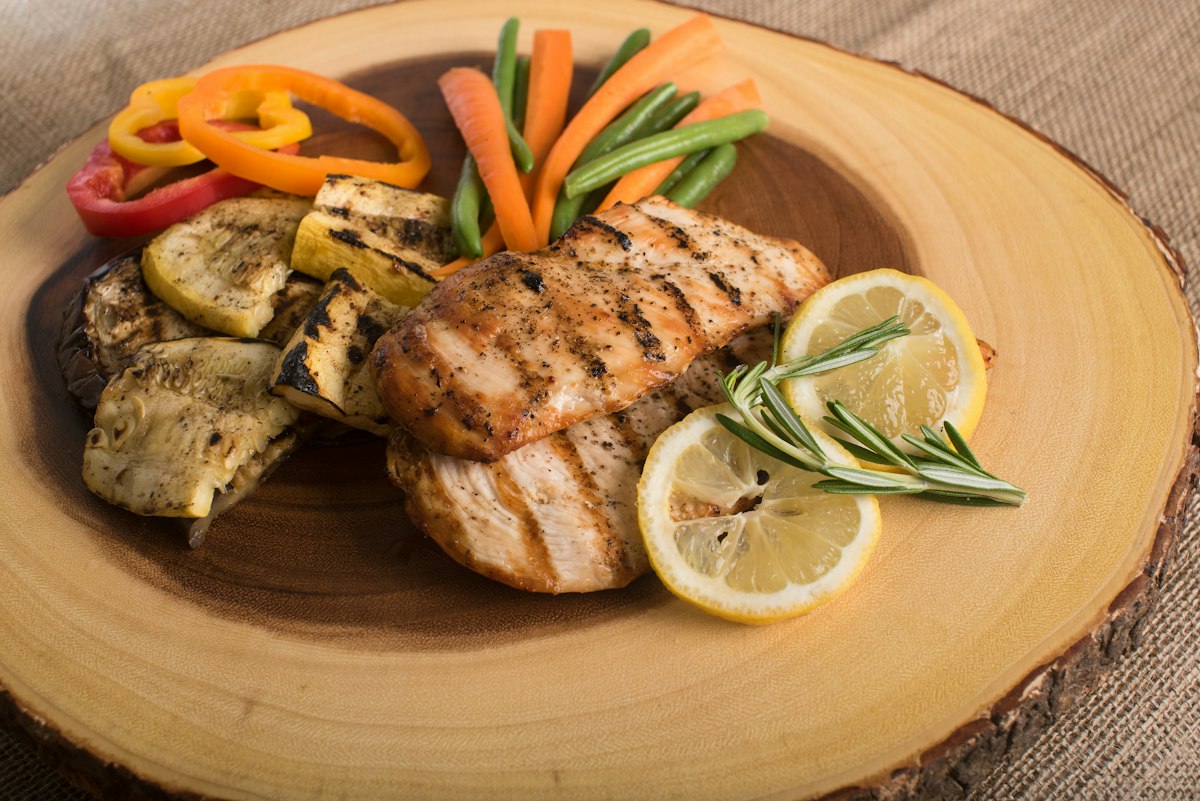
- 200g chicken breast (grilled)
- 180g cooked white rice
- Large mixed salad with 1 tbsp olive oil dressing
- Approx. 650 calories | 55g protein | 65g carbs | 12g fat
Meal 4 — Pre-Workout (4:30pm)
- 1 scoop whey protein with 300ml milk
- 1 large banana
- 30g oats
- Approx. 450 calories | 40g protein | 60g carbs | 6g fat
Meal 5 — Dinner / Post-Workout (7:30pm)
- 200g lean beef mince or salmon
- 250g sweet potato (baked)
- Steamed broccoli and green beans
- Approx. 700 calories | 50g protein | 65g carbs | 18g fat
Daily totals: ~3,000 calories | ~215g protein | ~300g carbs | ~78g fat. This plan provides a sustainable 300 to 400 calorie surplus for an 80kg male with a moderate activity level, sufficient protein for hypertrophy, and adequate carbohydrates to fuel four training sessions per week.
Meal Timing: Does It Actually Matter?
Total daily calories and protein are the primary drivers of muscle growth — meal timing is a secondary optimisation. That said, there are two timing windows that have clear evidence behind them:
- Pre-workout nutrition: Consuming carbohydrates and protein 60 to 90 minutes before training improves performance and delays fatigue. A simple pre-workout meal — rice and chicken, oats and protein powder, a banana with Greek yoghurt — is sufficient.
- Post-workout nutrition: Consuming protein within 30 to 60 minutes after training maximises the muscle protein synthesis window. A fast-digesting protein source — whey protein shake, chicken, eggs — consumed with carbohydrates accelerates glycogen replenishment and recovery.
- Before bed: Slow-digesting protein before sleep — cottage cheese, casein protein, Greek yoghurt — provides a sustained amino acid release during the overnight recovery window when growth hormone is at its peak.
Supplements That Actually Support Muscle Gain
Supplements are exactly that — supplementary. They fill gaps in a solid nutrition foundation. They do not replace food or fix a poor diet. The following are the only supplements with strong evidence for supporting muscle gain:
- Creatine monohydrate: The most researched supplement in sports science. Increases phosphocreatine availability in muscle tissue, enabling more reps at higher weights. 3 to 5 grams per day, any time. No loading phase required.
- Whey protein: A convenient, fast-digesting protein source for hitting daily targets. Use it when whole food is impractical — not as a replacement for real meals.
- Vitamin D3: Most Australians are deficient, particularly in southern states during winter. Optimal vitamin D levels support testosterone production, immune function, and recovery. 2,000 to 4,000 IU daily with a meal containing fat.
- Magnesium: Supports sleep quality and muscle relaxation. Many people eating in a caloric surplus with heavy training are marginally deficient. 300 to 400mg magnesium glycinate before bed.
Common Meal Plan Mistakes That Kill Muscle Growth
- Not tracking intake: Most people significantly underestimate how much they are eating. Use a food tracking app for at least 4 to 6 weeks to calibrate your understanding of portion sizes and macro content.
- Inconsistent protein distribution: Eating 20g of protein at breakfast and 120g at dinner is far less effective than evenly distributing 160g across 5 meals. Muscle protein synthesis has a per-meal ceiling of roughly 40 to 50g.
- Weekend nutrition collapse: Five days of perfect eating followed by two days of alcohol, takeaway, and no tracking eliminates your weekly surplus and often puts you into a deficit. The plan only works if it covers all 7 days.
- Cutting calories when progress slows: When muscle gain stalls, the instinct is to question the surplus. Usually the stall is a training issue, not a nutrition one. Audit your progressive overload before adjusting calories.
Get a Personalised Muscle Gain Plan
Generic meal plans only get you so far. At Reborn Physiques, we build fully personalised nutrition and training plans around your body composition, schedule, food preferences, and specific goals. No guesswork. No generic templates. A system built specifically for you.
Get Your Personalised Plan →Frequently Asked Questions
How many calories should I eat to build muscle?
Calculate your TDEE using a Mifflin-St Jeor calculator and add 250 to 500 calories per day. For most people, 300 to 400 calories above maintenance provides sufficient surplus for muscle growth without excessive fat gain.
How much protein do I need per day to build muscle?
Current evidence supports 1.6 to 2.2 grams of protein per kilogram of bodyweight per day. Distribute this across 4 to 5 meals rather than consuming it in one or two sittings for maximum muscle protein synthesis.
Can I build muscle and lose fat at the same time?
Body recomposition — simultaneous muscle gain and fat loss — is possible for beginners, those returning from a training break, and people with above-average body fat. It is significantly more difficult for advanced trainees. For most people, alternating dedicated muscle-building phases with fat-loss phases produces faster results than attempting both simultaneously.
Do I need to eat differently on rest days?
Slightly. On rest days, you can reduce carbohydrate intake modestly (by 50 to 80 grams) since you are not depleting glycogen through training. Keep protein targets identical on all days — muscle protein synthesis occurs during recovery, not just immediately post-workout.
Is creatine safe and worth taking?
Yes. Creatine monohydrate is the most researched supplement in sports science and has an exceptional safety profile across decades of study. 3 to 5 grams per day consistently produces measurable improvements in strength output and muscle volume, making it the single most cost-effective supplement for muscle gain.
Frequently Asked Questions
How many calories should I eat to build muscle?
Add 250 to 500 calories above your TDEE. For most people, 300 to 400 calories above maintenance is the sweet spot for muscle growth without excess fat gain.
How much protein do I need per day to build muscle?
1.6 to 2.2 grams of protein per kilogram of bodyweight per day, distributed across 4 to 5 meals for maximum muscle protein synthesis.
Can I build muscle and lose fat at the same time?
Body recomposition is possible for beginners and those returning from breaks, but is difficult for advanced trainees. Most people get faster results from dedicated muscle-building and fat-loss phases.
Do I need to eat differently on rest days?
Slightly reduce carbohydrates on rest days but keep protein targets identical — muscle protein synthesis occurs during recovery, not just post-workout.
Is creatine safe and worth taking?
Yes. Creatine monohydrate is the most researched supplement in sports science. 3 to 5 grams per day consistently improves strength and muscle volume with an exceptional safety record.